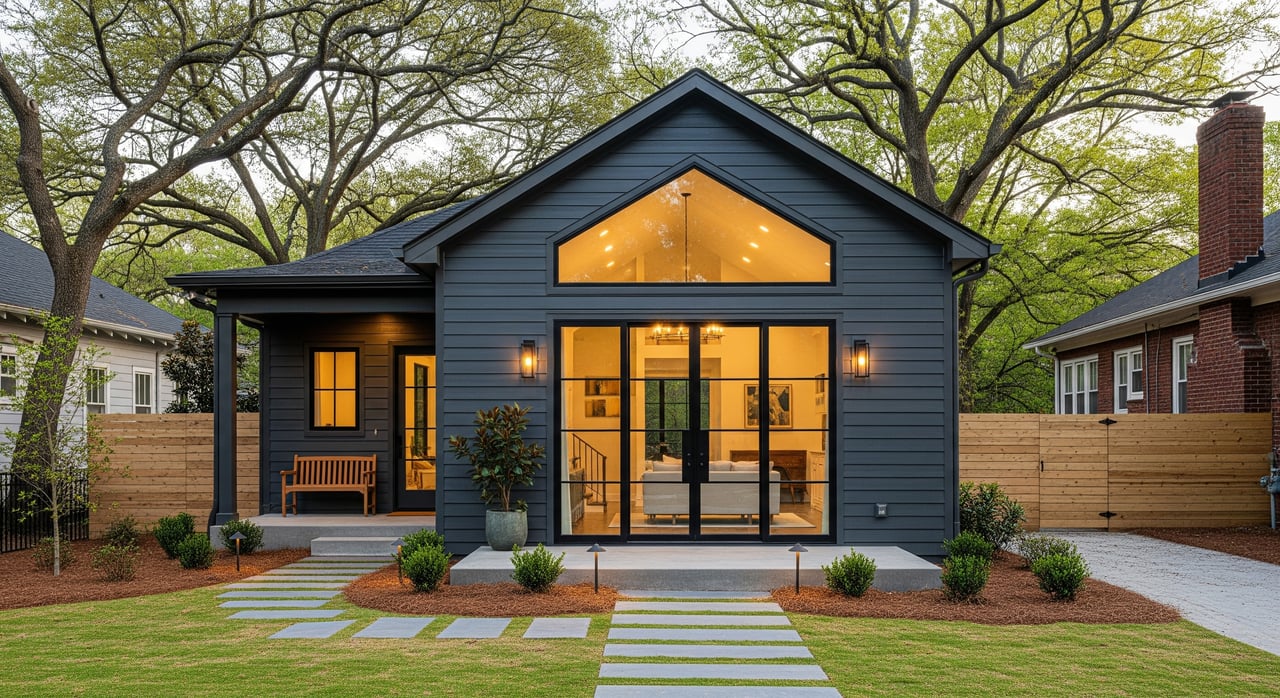
Could a backyard cottage in LaVista Park help you house family, generate rental income, or boost resale value? If you are unsure where to start, you are not alone. Rules change from block to block near the Atlanta and DeKalb County line, and that affects everything from design to rental options. In this guide, you will learn how to confirm your property’s jurisdiction, what to verify in the City of Atlanta or DeKalb rules, how the permitting process works, and a simple way to estimate rental ROI so you can plan with confidence. Let’s dive in.
What an ADU is
An accessory dwelling unit is a smaller, independent home on the same lot as a primary residence. Common types include:
- Detached backyard cottage or garage apartment
- Attached side or rear addition with its own entrance
- Interior conversion like a basement or over‑garage suite
ADUs can support long-term rentals, short-term stays if allowed, or multigenerational living. The best type for you depends on lot layout, budget, and local rules.
Start with jurisdiction
Before you sketch a plan, verify whether your LaVista Park address sits inside the City of Atlanta or in unincorporated DeKalb County. Jurisdiction affects zoning standards, permitting, utility connections, property taxes, and short-term rental licensing.
- Use the official maps and resources on the City of Atlanta website and the DeKalb County website to confirm your parcel and zoning.
- If online maps are unclear, call or email the City of Atlanta Planning Department or DeKalb County code office to confirm.
- If your property has an HOA or recorded covenants, review those documents for any ADU or rental restrictions.
LaVista Park straddles the Atlanta and DeKalb interface, so do not assume one set of rules applies everywhere. Confirm first, then plan.
What Atlanta rules cover
If your parcel is inside the City of Atlanta, review the Unified Development Ordinance and permitting guidance on City of Atlanta planning and building resources. Pay attention to:
- Allowed ADU types and zones. Confirm whether detached, attached, and interior ADUs are permitted in your zoning district.
- Owner-occupancy and rental rules. Some places require either the main home or the ADU to be owner-occupied. Verify whether long-term rentals, short-term rentals, or both are allowed, and review any licensing requirements.
- Size limits and height. Check maximum square footage, height limits, setbacks, lot coverage, and floor area ratio to understand placement.
- Parking and access. Confirm required off-street spaces, tandem allowances, curb cut rules, and driveway width limits.
- Design review or overlays. If your property is in a historic or conservation area, extra design steps may apply.
- Utilities and addresses. Ask whether a separate meter or sewer tap is required for an ADU and whether new fees apply.
- Permits and inspections. Expect zoning review, building permits and trade permits, staged inspections, and a certificate of occupancy.
- Variances and fees. If your site cannot meet a standard, you may need a variance. Review the fee schedule and any system development charges.
If your parcel is in DeKalb County, check DeKalb’s zoning, permitting, and rental rules through the DeKalb County resource hub.
LaVista Park lot checklist
Every site is different. Walk your lot with this checklist to identify opportunities and constraints:
- Lot geometry and slopes. Measure width, rear yard depth, and any steep grades that affect placement and foundation costs.
- Existing structures. Consider converting a garage or basement if allowed, which can reduce costs and timelines.
- Parking and curb cuts. Note whether you have alley access or must add tandem parking or request a curb cut.
- Utilities and sewer. Verify if you are on city sewer or septic at the edges. New taps, meters, or capacity reviews may add time and fees.
- Trees and stormwater. Tree protection and stormwater rules can affect footprint, impervious surface, and cost.
- Overlays and neighbors. If a historic or conservation overlay applies, expect added design review. Early neighbor communication can reduce friction during approvals.
Permitting steps and timeline
The sequence below reflects a typical City of Atlanta path. If you are in DeKalb County, the steps are similar, but confirm details with the county.
- Jurisdiction and zoning confirmation
- Optional pre-application chat with a planner
- Concept site plan and schematic design
- Zoning review or variance application if needed
- Full construction drawings by your architect or designer
- Building permit application and plan review for all trades
- Permit issuance and fee payment
- Construction with staged inspections
- Final inspection and Certificate of Occupancy
Typical time ranges:
- Pre-application to zoning clearance: 2 to 12 weeks
- Plan preparation: 4 to 12 weeks
- Plan review and permit issuance: 4 to 12 weeks
- Construction: 4 to 9 months for a small detached ADU, often shorter for conversions
- Concept to final CO: commonly 4 to 12 plus months
Common delays include incomplete plans, sewer or water meter issues, tree or landscape holds, and added time for variance hearings.
Costs and ROI basics
Costs vary with size, design, finishes, access, and utility work. In metro Atlanta, plan conservatively:
- Typical ADU size: 300 to 900 square feet for detached units
- Rough construction range: about $150 to $350 plus per square foot
- Do not forget soft costs: design and engineering, permits, utility taps, landscaping, parking, and a 10 to 20 percent contingency
A simple framework helps you test the numbers:
- Gross annual rent = monthly rent × 12
- Net operating income (NOI) = gross annual rent − operating expenses
- Cash-on-cost = NOI ÷ total project cost
- Payback period = total project cost ÷ annual net cash flow
Example, for illustration only:
- 600 sq ft ADU at $200 per sq ft = $120,000 hard cost, plus $30,000 soft costs, total $150,000
- Long-term rent at $1,600 per month → $19,200 gross per year
- Assume 30 percent operating expenses → $5,760
- NOI = $13,440 → cash-on-cost ≈ 9.0 percent, payback ≈ 11.2 years
- Short-term rent averaging $2,200 per month → $26,400 gross per year
- Assume 45 percent operating costs → $11,880
- NOI = $14,520 → cash-on-cost ≈ 9.7 percent, payback ≈ 10.3 years
Your results depend on real rent comps, vacancy, utilities, insurance, and management choices. Use conservative assumptions.
Rental strategies and rules
ADUs can support different goals:
- Long-term rental for steady income and simpler management
- Short-term rental for higher gross potential, if licensed and allowed
- Multigenerational living or guest space with future rental flexibility
- Home office or studio for added usability
If you plan to rent, confirm business license needs, housing code compliance, and short-term rental registration rules in your jurisdiction. Use the City of Atlanta site or the DeKalb County site to locate current rental and licensing requirements.
Next steps and local resources
- Verify your parcel and zoning on the City of Atlanta resources or DeKalb County resources.
- Pull your zoning district standards, including ADU allowances, size limits, and parking.
- Schedule a pre-application conversation with City or County planning staff to confirm your concept and any overlay or utility items.
- Get two to three bids from local architects and contractors who have ADU experience in northeast Atlanta.
- Run the ROI worksheet with local rent comps and your bids. Adjust for management, utilities, insurance, and vacancy.
When you are ready to explore value, marketing, or rent comps for LaVista Park, a boutique, broker-led approach helps you make confident choices and avoid surprises.
Ready to plan your ADU?
Whether you are building for family or income, the smartest first move is to confirm jurisdiction and standards, then map your timeline and budget. If you want neighborhood-specific rent comps, a second opinion on resale impact, or introductions to trusted designers and builders, reach out to the local team that delivers white-glove guidance in northeast Atlanta. Connect with Rose Quartz Realty to start a focused, step-by-step plan for your LaVista Park ADU.
FAQs
What is considered an ADU in LaVista Park?
- An ADU is a secondary, independent dwelling on the same lot as a primary home, which can be detached, attached, or an interior conversion, subject to your jurisdiction’s zoning and permit rules.
How do I confirm if my LaVista Park address is in Atlanta or DeKalb?
- Check official parcel and zoning information on the City of Atlanta website and the DeKalb County website, and contact planning staff if maps are unclear.
Are short-term rentals allowed in LaVista Park ADUs?
- It depends on jurisdiction and licensing; verify current short-term rental rules and registration requirements with the City of Atlanta or DeKalb County before you invest.
How long does it take to permit and build an ADU in Atlanta?
- From concept to Certificate of Occupancy, many projects take 4 to 12 plus months, including design, plan review, and 4 to 9 months of construction for a small detached unit.
What does an ADU cost in metro Atlanta?
- Costs vary widely; a conservative planning range is roughly $150 to $350 plus per square foot, plus soft costs like design, permits, utilities, and a 10 to 20 percent contingency.
Do I need to live on site to rent an ADU?
- Some places require owner-occupancy of either the main home or the ADU; confirm the rule that applies to your parcel through your jurisdiction’s zoning and permitting resources.
